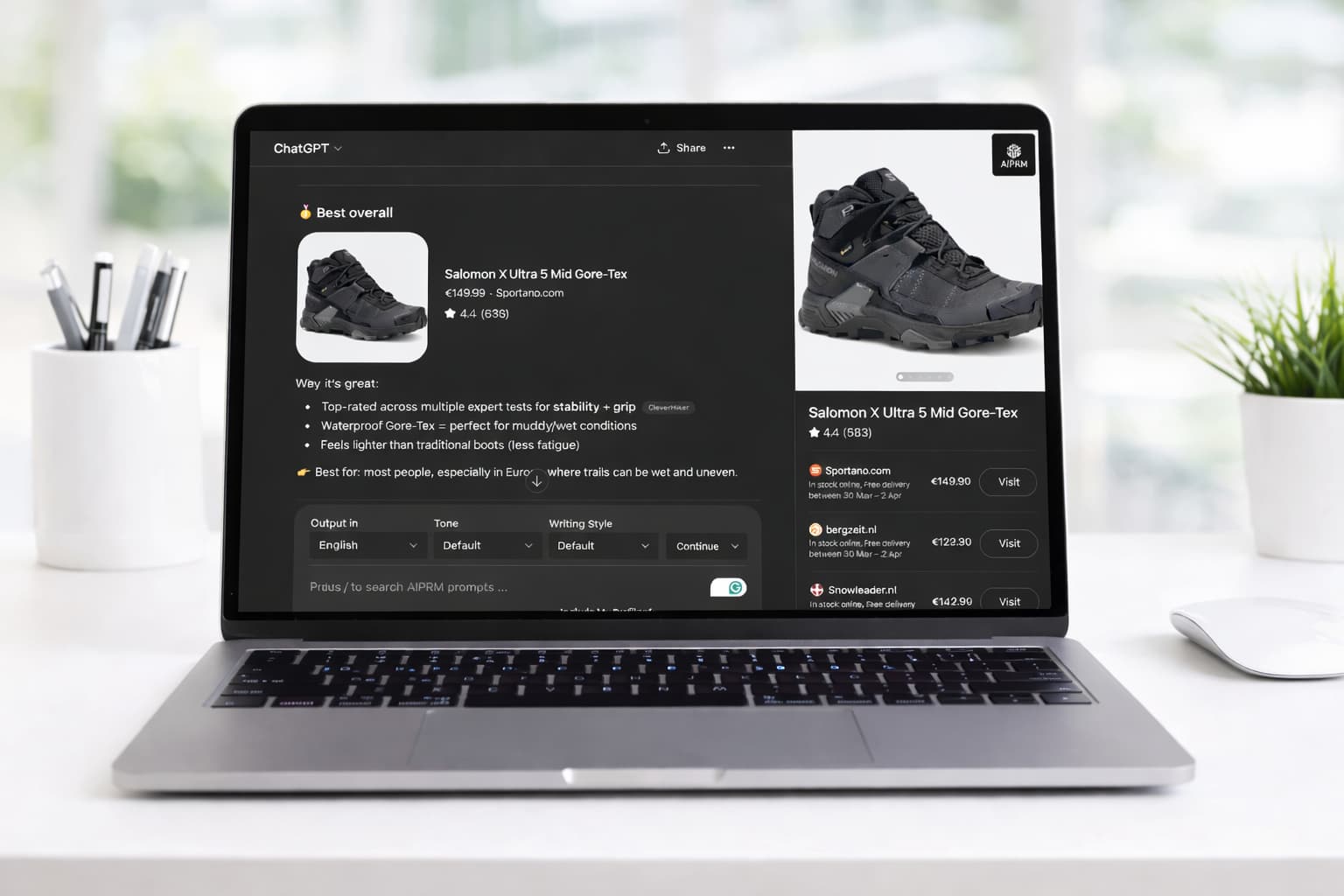
For years, the online journey has been predictable: search on Google, click through to a website, browse products, and then decide. But now, more and more shoppers are skipping that process entirely and going straight to AI tools like ChatGPT to ask what they should buy.
And now, for the first time, they don’t just get recommendations.
They can actually complete the purchase.
With Shopify’s latest update, millions of merchants can now sell directly inside ChatGPT and other AI platforms, turning conversational search into a fully functional shopping experience.
This isn’t just a new feature; it’s a completely new entry point into eCommerce.
In this guide, we’ll break down exactly what Shopify launched, how it works, and what it means for your store moving forward.
What is the Shopify ChatGPT integration?
Shopify has introduced a new infrastructure layer that allows merchants to surface and sell their products directly within AI-powered environments like ChatGPT.
This system is powered by what Shopify calls Agentic Storefronts, which essentially act as a bridge between your Shopify store and AI platforms where customers are actively researching products.
What makes this particularly notable is how seamless it is. There’s no need to install additional apps, configure integrations, or manage product feeds manually. If you’re a Shopify merchant, your products can now be discovered inside ChatGPT by default.
As Mani Fazeli, Shopify’s VP of Product explained in his tweet:
“Starting this week, millions of Shopify merchants can sell in ChatGPT… AI is a new front door to commerce. Shopify is what’s behind it everywhere.”
In other words, Shopify isn’t just adapting to AI, it’s positioning itself as the infrastructure powering commerce across every AI interface.
How shopping in ChatGPT actually works
To understand the impact, it helps to look at how the new shopping journey actually plays out from a customer’s perspective.
Instead of navigating between multiple tabs, search engines, and product pages, the entire discovery process begins inside a conversation.
1. Discovery starts in ChatGPT
A shopper might ask something like:
“Best skincare products for sensitive skin” or “Affordable standing desks under $300.”
Rather than returning a list of links, ChatGPT now surfaces actual products pulled directly from Shopify’s ecosystem.
2. Shopify products are surfaced
These results come from the Shopify Catalog, which prioritizes relevance based on the shopper’s query.
As Fazeli noted:
“When buyers look for products in ChatGPT, the Shopify catalog returns the most relevant options.”
This means your product isn’t just competing in search rankings anymore, it’s being evaluated in real time by AI against other options.
3. Product selection happens in-chat
Users can compare products, review options, and narrow down their choices without ever leaving the conversation.
This compresses what used to be a multi-step browsing journey into a single, guided interaction.
4. Checkout happens seamlessly
Once a shopper is ready to buy, the transition is frictionless:
On mobile, the checkout opens in an in-app browser within ChatGPT
On desktop, users are redirected to your store in a new tab
Importantly, your existing setup remains intact. Your branding, pricing logic, payment methods, and checkout customizations all carry through.
This is not a marketplace layer; it’s an extension of your existing storefront.
Why this is a big deal
At first glance, this might look like just another distribution channel. But in reality, it represents a much bigger shift in how commerce works.
1. AI is becoming the new homepage
For many shoppers, ChatGPT (and other AI tools) is quickly becoming the first place they go when they have purchase intent.
Instead of browsing multiple websites, they ask a question and expect curated, relevant answers instantly.
That means your “first impression” no longer happens on your homepage, it happens inside an AI-generated response.
2. Zero setup creates massive distribution overnight
One of Shopify’s biggest advantages here is how frictionless this rollout is.
Merchants don’t need to:
Install new apps
Manage separate product feeds
Pay additional marketplace fees
With Agentic Storefronts, your products are automatically eligible to appear across multiple AI channels, including:
ChatGPT
Microsoft Copilot
Google AI Mode and Gemini
Future integrations (including Meta experiences)
This dramatically expands your reach without adding operational complexity.
3. You still own the customer relationship
Unlike traditional marketplaces, Shopify has designed this system so merchants retain full ownership of their customers.
Orders flow directly into your Shopify admin, complete with attribution showing they came from ChatGPT. You remain the merchant of record, meaning you control the relationship, the data, and the post-purchase experience.
This combination, expanded distribution with retained ownership, is what makes this shift particularly powerful.
What is Shopify’s “Agentic Commerce”?
This launch is part of a broader vision Shopify is calling agentic commerce.
Rather than treating AI as just another channel, Shopify is building infrastructure for a future where AI agents are the primary interface between shoppers and products.
From Shopify's ChatGPT announcement:
“Commerce is no longer confined to websites or apps. It’s happening in AI chats, in productivity tools, and in search results.”
In this model:
AI handles discovery and decision support
Shopify powers the transaction layer
Merchants show up wherever buying intent exists
It’s a shift from destination-based commerce (coming to a website) to distributed commerce (meeting customers wherever they are).
What this means for your Shopify store
So what should merchants actually take away from this?
The biggest misconception would be thinking that your website matters less.
In reality, the opposite is true.
Even though discovery is happening in AI, the moment of conversion still depends heavily on your store experience, especially your product detail pages. It's important to see if your Shopify brand is ready for ChatGPT shopping.
PDPs just became more important (not less)
If anything, this shift raises the bar for what a product page needs to do.
Shoppers arriving from ChatGPT are not casually browsing. They’ve already:
Asked a specific question
Seen curated options
Narrowed down their choices
By the time they land on your PDP, they are much closer to making a decision.
That means your page needs to deliver instantly.
It needs to clearly communicate:
What the product is
Why it’s the right choice
Why your brand is trustworthy
All within a matter of seconds.
If your PDP is slow, cluttered, or unclear, the drop-off will happen immediately, because the user can easily go back and choose another option.
Mobile-first design is now non-negotiable
Another important shift is where these interactions are happening.
A large portion of ChatGPT usage is on mobile devices, which means your store experience needs to be fully optimized for smaller screens.
This goes beyond just responsiveness.
Your mobile PDP should be:
Fast-loading, even on weaker connections
Structured for easy scrolling and scanning
Designed with clear visual hierarchy
Built for quick, confident decision-making
If your mobile experience feels clunky or overwhelming, it will directly impact your ability to convert AI-driven traffic.
Where Instant fits in
This is where tools like Instant become increasingly valuable.
If AI is becoming the discovery layer, then your storefront, especially your PDP, is the conversion layer.
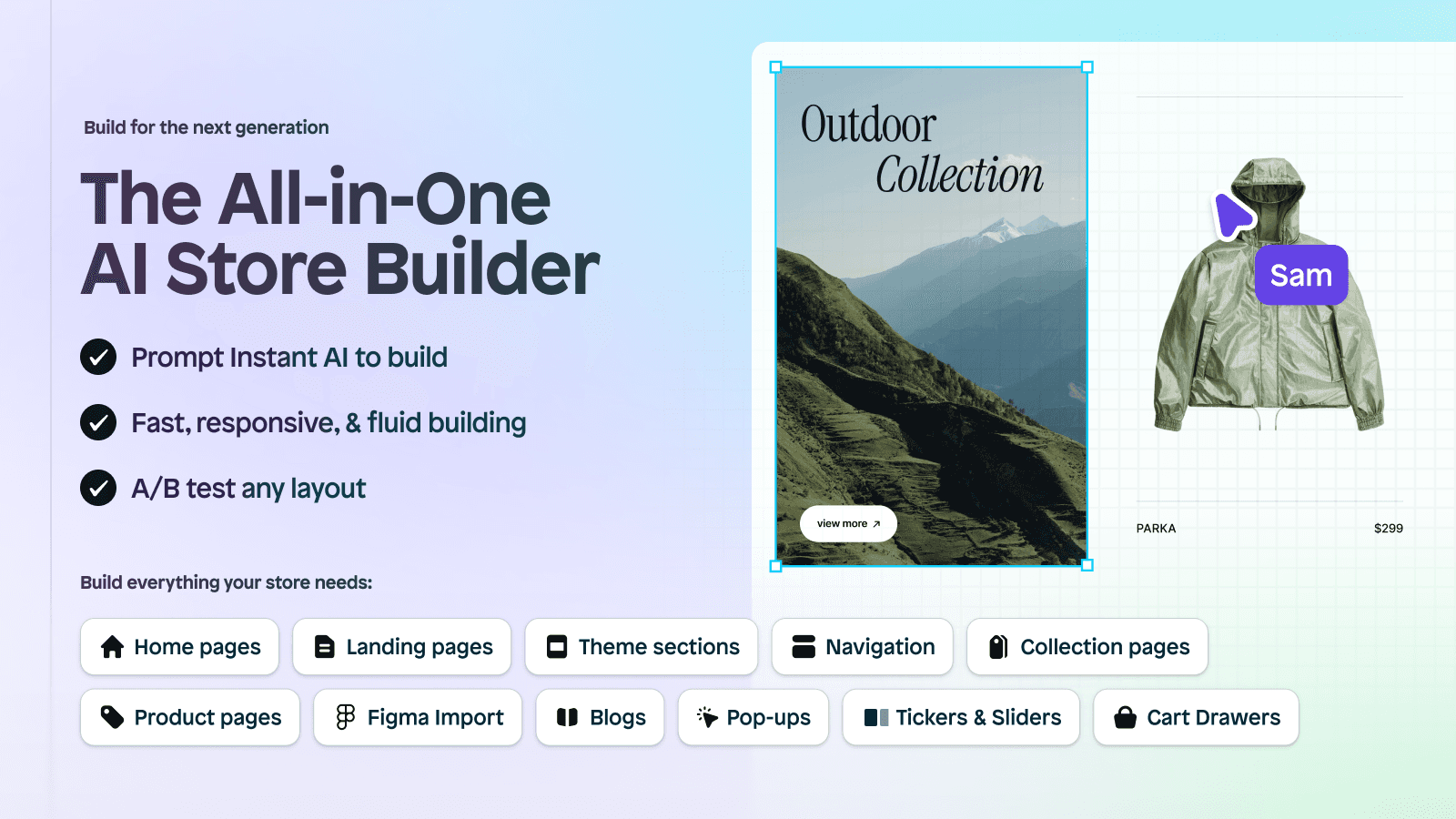
With Instant’s AI Page Builder, you’re not limited by your Shopify theme when it comes to designing high-performing pages.
You can:
Build fully custom product pages tailored for conversion
Optimize layouts specifically for mobile-first experiences
Quickly test and iterate on different page structures
Create consistent, branded experiences that match the expectations set in AI
Instead of trying to retrofit your theme to keep up with this new behavior, you can design pages intentionally for it.
Final thoughts
Shopify’s ChatGPT integration is a clear signal of where commerce is heading.
We’re moving from a world where customers search and browse…
To one where they ask, compare, and decide, often before ever visiting a website.
But while the entry point is changing, one thing remains the same:
Your store is still where the decision happens.
The brands that succeed in this new landscape won’t just be the ones that show up in AI results.
They’ll be the ones that convert when it matters most.